
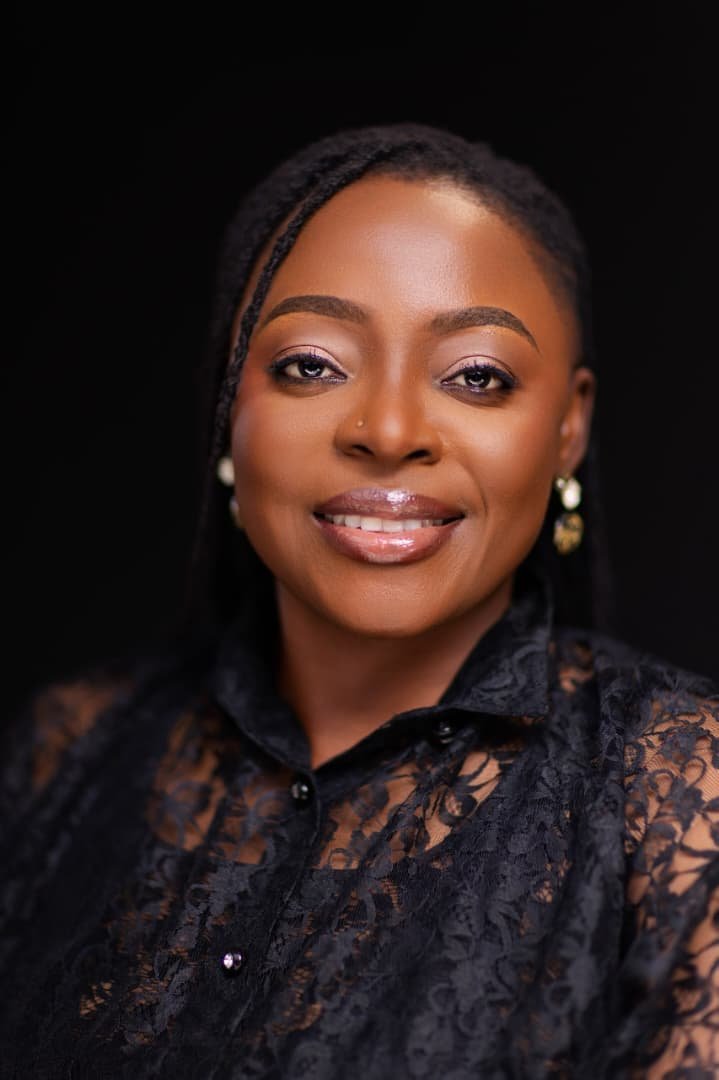
By Princeley Njukang, Cameroon
In Africa, when a person with visual impairment hears that a new book is about to be published, they are often left indifferent, knowing that whatever the content of the book is, they will not be able to read it firsthand.
Most persons with visual impairments rely on Braille to read and write, yet very few publications in Africa are produced in Braille. According to the World Blind Union, less than 10% of published material worldwide is available in accessible formats for people who are blind or have low vision, a shortage widely known as the “global book famine.”
“I went from primary school to university without ever owning a book in Braille,” Sama Bayuga said. “I had to rely on others to read textbooks for me, and it was very hard, because it took a lot of their time, and I was worried that I was being a burden to them,” he added.
But if persons with visual impairments have always been an afterthought in publishing, Cameroonian multiple award-winning journalist, gender and disability advocate, Comfort Mussa, says it is time to change that.
This August, her first literary work, The Shape of Unbroken Things/Ce Qu’on Ne Brise Pas, will be released simultaneously as a bilingual English-French tête-bêche edition in print and Braille, with an audiobook forthcoming. It is, as her publisher, Bakwa Books, puts it, “a publishing experiment in what a book can hold and who it can reach.”
For Mussa, words are powerful, and that power is amplified when it has to do with people who only make sense of their world through words
“The most defining moment came during a reporting assignment on inclusive education. A blind child held my hand and asked me what a picture was. I realized then that something as ordinary as a photograph could be inaccessible, and that my words might shape her imagination of the world.”
Those experiences found their way into The Shape of Unbroken Things.

Amidst the pain and feelings of alienation, Iya finds solace in the company of Mambo, a girl whose worldview is shaped by the hearing and speech disability of her mother. The two girls have not only a bond but a sisterhood that protects them from the cruelty of the world.
The story mirrors the exclusionary struggles faced by children with disabilities in Cameroon, but it does so while confronting the complex question of what it means to navigate adolescence in a world that regularly reminds you of your perceived deficits.
“I want young readers with disabilities to see themselves in stories,” she said.
Difficult and Worthwhile/
Producing books in Braille is costly because of the specialized equipment, human expertise, and the complexity of Braille.
Producing books in Braille is costly because of the specialized equipment, human expertise, and the complexity of Braille.
Typically, a print page may run up to three Braille pages. Sometimes, one printed book is split into multiple Braille volumes to make it portable.
For a debut novella, deciding to experiment with accessible publishing was a risk, and Mussa says she was sometimes asked whether it was worth it. But she says she was ready to face it all, that “once you have seen exclusion up close, you cannot unsee it.”
Coordinating with the Braille translators, French translators, and proofreaders to ensure consistent quality across productions was challenging, she told DNA.
“But my publisher, Bakwa Books, did an outstanding job coordinating all of this, and the result has been profoundly rewarding.”
Despite the challenges, Mussa says if she is ever to publish again, she would absolutely take this route.
“Accessibility is not an add-on; it is the heart of storytelling. Even if it is more costly, the value of reaching every reader outweighs the challenges. This is the path I want to walk as a writer.”
For Readers Long Left Behind/
The call for books and other print material, such as newspapers, to be made available in Braille has gone on for years, but the response has been timid, with only a few private institutions producing limited textbooks for their pupils and students.
The call for books and other print material, such as newspapers, to be made available in Braille has gone on for years, but the response has been timid, with only a few private institutions producing limited textbooks for their pupils and students.
The Braille editions of The Shape of Unbroken Things were produced in partnership with Coco Bertin and the Inclusive Vocational Training Institute, which translated the novella into English and French Braille.
Outside such efforts, finding a Braille book in a bookshop, especially in Cameroon, is like looking for a needle in a haystack.
And so when it was announced that, for the first time, a book would be published not only in English and French but also in English and French Braille, Bayuga says he could not believe it.
“It’s a dream come true, something we have always prayed for,” he said. “I remember when I was writing the GCE and I badly needed to have textbooks, and one day I took a book to walk round Buea looking for someone to type the book so I could at least access it with a screen reader. It was stressful,” he told DNA.

“Even when people make an effort to make books available in Braille, it is usually long after the book has been published and enjoyed by sighted readers, so I’m very excited… I feel like I should just go and take the book and start reading,” she said.
She adds that knowing that an author actually thought of publishing in Braille made them feel that they were no longer second-class citizens.
For Kum Nji Desmond, another teacher with visual impairment who offers transcription services at the University of Bamenda, Mussa’s decision to embrace accessible publishing may prove more beneficial than imagined.
“When doing transcription, we discover that many learners with visual impairments have a problem with spelling… they just spell words as they pronounce them,” he says, explaining that because few books are available in Braille, learners with visual impairments have limited opportunity to enrich their spelling capacity and vocabulary.
“If they are able to have the book, just having contact with the words will help them,” he said.
According to Bakwa Books, The Shape of Unbroken Things/Ce Qu’on Ne Brise Pas is for readers who read with their eyes, ears, hands, and hearts. It extends Bakwa’s mission of deepening multilingual, bold African writing, which it has done since its founding in 2011, this time ensuring that persons with visual impairments, too, can enjoy the riches of literature.
The 86-page novella is now available for preorder ahead of its August 2026 release.
 Nyaradzo Chitungo
  Princely Kesah