
By Princeley Njukang, Cameroon
The idea of inclusive education is gaining ground in Cameroon, but little has been done to develop an inclusive pedagogic framework to support it, a new study at the University of Buea has found.
The study, conducted at the Advanced School of Translators and Interpreters (ASTI), University of Buea, and presented on July 29, 2026, found growing recognition of the need to include persons with disabilities in the school’s programmes. Focusing on the experiences of students with visual impairments, it revealed that fewer than five have enrolled at ASTI since the school was established in 1985.
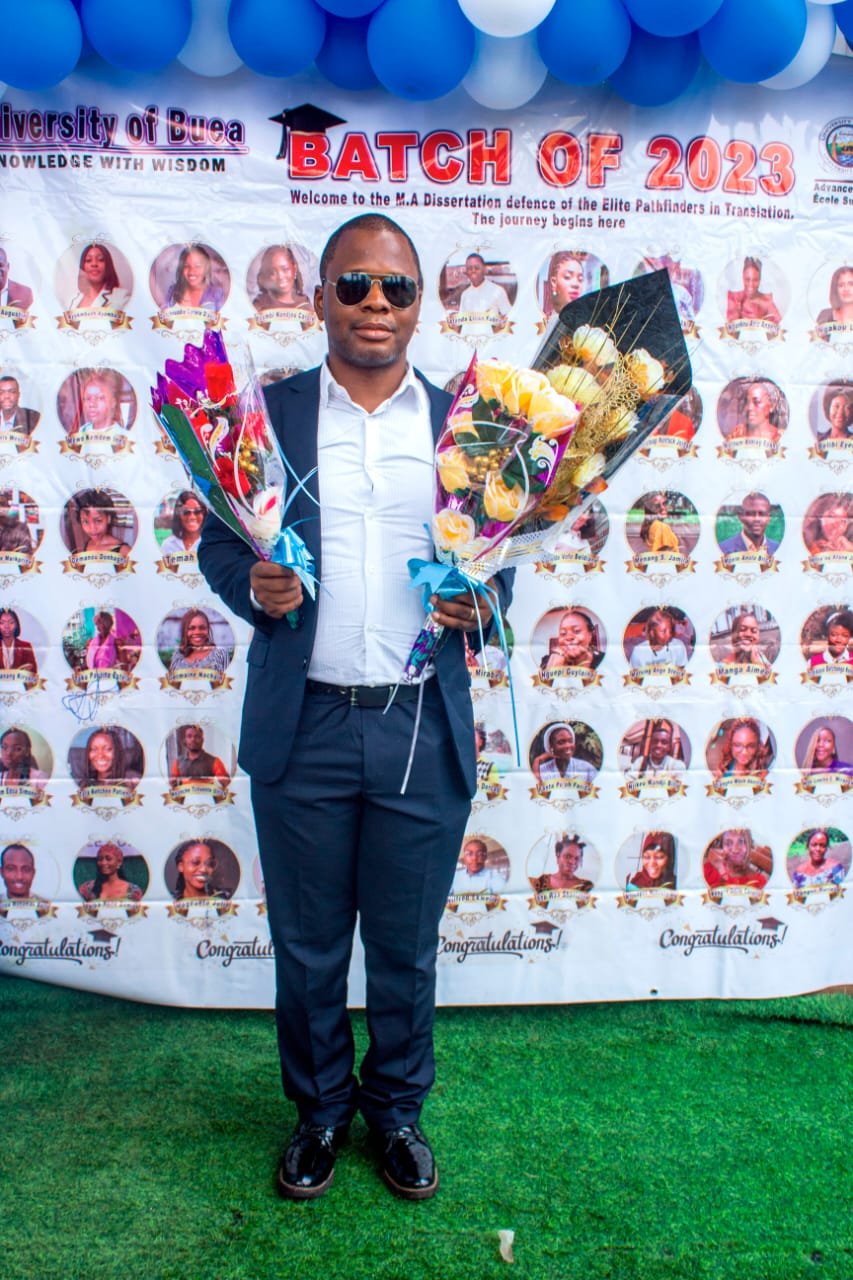
The researcher, Mr. Ngifor Ronald, attributed the low enrolment to persistent stereotypes that persons with visual impairments cannot study translation or interpretation.
“I found it really troubling when I came here because my lecturers did not even know what to do with me,” said Ngifor, who is himself visually impaired. “That is why I decided to focus my Master’s dissertation on the problem.”
The study, entitled Toward Inclusive Translation Training of a Visually Impaired Student in the Advanced School of Translators and Interpreters, explored the realities of inclusive education by drawing on the researcher’s own experiences alongside those of other visually impaired students at ASTI.
He argued that inclusive education, now a common policy goal in Cameroon, requires more than declarations.
“We need a clear pedagogic framework. Educational stakeholders need to be trained on how to provide education in a way that everyone can access,” he said.
Cameroon adopted a national inclusive education policy in 2024 and guarantees access to education for persons with disabilities, with free education available in most public educational institutions. However, disability advocates have continued to call for stronger implementation.
In July, another study found that students with visual impairments at the University of Buea faced significant spelling challenges because very little academic material is available in Braille, the writing system used by many blind learners.
Ngifor said his findings point to what he described as “tokenistic inclusion” at the university, where students with disabilities are admitted but not adequately supported to succeed.
“As a student, I could not use the resources in the library because almost none were available in a format that I could access,” he told Disability News Africa.
Having successfully defended his Master of Arts in Translation dissertation, Ngifor, who also teaches French and English at the secondary school level, hopes the research will contribute to making ASTI and other schools of translation and interpretation in Cameroon more inclusive.
“We are working to publish the study, and I would love to do further research because I found this is an under-researched area,” he said.
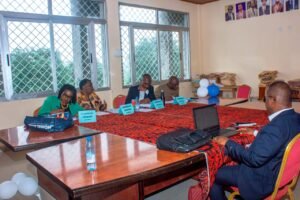
Speaking to Disability News Africa after the defence, the chair of the examination panel, Prof. Jean Pierre Atouga, said the findings are already influencing thinking within ASTI.
“The findings have come to change the way we do things at ASTI. It has actually shaped our vision. We now believe inclusive education is no longer something to be speculated about,” he said.
He noted that Ngifor was the first student with a visual impairment to defend a master’s dissertation at ASTI and described supervising the work as both challenging and rewarding.
According to Atouga, the study has implications beyond ASTI and offers lessons for higher education institutions across Cameroon.
“That is why I don’t want the study to end just here,” he said, urging lecturers to pay closer attention to students with disabilities and the specific support they require to succeed.
Ngifor’s defence was attended by members of the visually impaired community in Buea, many of whom described the findings as an important contribution to advancing their right to inclusive higher education. Whether the recommendations will translate into institutional change, however, remains to be seen.
 Princely Kesah