
By Guy-Bruno Maimo, Cameroon
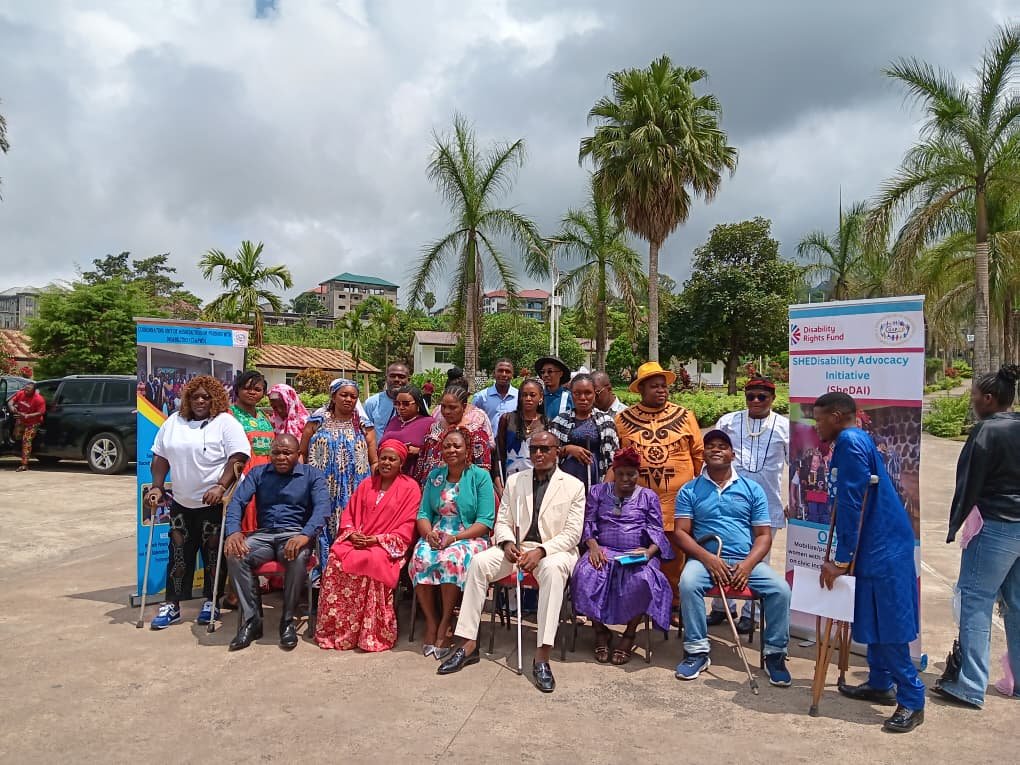
Women and girls with disabilities in Cameroon are expected to benefit from strengthened advocacy, capacity building, and greater participation in decision-making following the launch of the She Disability Advocacy Initiative (SHEDAI) by the Coordinating Unit of Associations of Persons with Disabilities (CUAPWD).
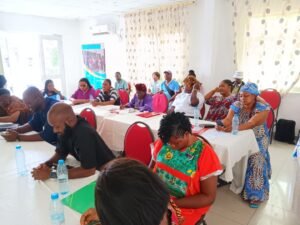
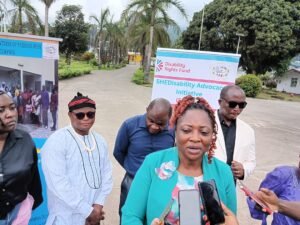
The initiative was officially launched on 11 June in Buea during a ceremony held under the patronage of the regional delegation of social affairs. Bringing together government officials, organizations of persons with disabilities, civil society actors, and media practitioners, the event marked the start of a one-year pilot project aimed at promoting disability- and gender-inclusive policies and budgets while strengthening the voice and leadership of women with disabilities.
Speaking during the opening ceremony, CUAPWD General Coordinator Chick Sama described the organization as a network coordinating more than 280 organizations of persons with disabilities across the Northwest, Southwest, and West regions.
He said the organization works in health, education, livelihoods, social inclusion, humanitarian outreach, and inclusive research, guided by the principle that persons with disabilities should be involved in decision-making processes.
“Our mission is that persons with disabilities come together and speak with one voice,” he said, noting that the Southwest Region was hosting the first SHEDAI launch in Cameroon.
Barriers to inclusion
During a press interaction, Sama identified four major barriers confronting persons with disabilities: communication barriers, environmental barriers, institutional barriers, and negative attitudes.
He explained that women with hearing impairments are often excluded from gender-awareness campaigns because information is not provided in sign language, while visually impaired women are left out when information is only disseminated through printed materials.
He also pointed to inaccessible infrastructure and discriminatory policies that unintentionally exclude persons with disabilities.
“The greatest barrier is our attitude,” he said, arguing that disability should be viewed as a form of human diversity rather than a problem.
Sama added that the ongoing crisis in Cameroon’s Northwest and Southwest regions has increased the number of persons living with disabilities, making inclusion in both humanitarian and development interventions more urgent.
He said SHEDAI differs from many initiatives because activities are being implemented largely by persons with disabilities themselves rather than by external actors. Leaders of organizations of persons with disabilities will receive support to carry out community-based advocacy, while a national policy dialogue focused on gender and disability is expected to help shape future reforms.
Sama expressed hope that the pilot phase would pave the way for broader reforms within legal, legislative, and traditional systems.
He also disclosed that the project is funded by the Disability Rights Fund, a United States-based organization supporting Cameroon for the first time. The pilot phase covers two divisions in the Southwest Region and three divisions in the Northwest Region, with prospects for expansion if successful.
Focusing on women’s leadership
Presenting the project, CUAPWD Women Project Officer Abigail Ngwe said the Disability Rights Fund seeks to strengthen disability rights movements globally and adopts an intersectional feminist approach that recognizes the multiple forms of discrimination experienced by women with disabilities.
According to Ngwe, SHEDAI seeks to advocate for the adoption of disability- and gender-inclusive policies in line with Articles 4 and 6 of the United Nations Convention on the Rights of Persons with Disabilities, which Cameroon has ratified.
Speaking to journalists after the launch, she said the project is intended not only to empower women with disabilities but also to challenge societal perceptions.
“The project is coming to change the way people see women with disabilities and address barriers that they face,” she said.
Ngwe explained that advocacy groups will be created and women trained on legal instruments and rights frameworks to strengthen their ability to advocate within their communities.
“Change begins from our homes,” she added.
She said the project is built around three objectives: strengthening institutional capacity through training for CUAPWD staff and leaders of organizations of persons with disabilities; empowering women with disabilities through capacity-building on sexual and reproductive health, civic participation, and gender equality; and increasing policy influence through accessible policy briefs, dialogue with state institutions, and monitoring of government commitments.
Ngwe highlighted the challenges faced by women with disabilities, noting that they experience discrimination linked both to gender and disability. She pointed to exclusion from public consultations, inaccessible polling stations, economic dependence, unemployment, and gender-based violence.
Citing UN Women statistics, she said women with disabilities face significantly higher risks of gender-based violence than women without disabilities, while access to justice and reporting mechanisms remains limited.
She stressed that women with disabilities have the right to speak out and participate fully in society.
Calls for systemic change
Officially launching the project on behalf of the Regional Delegate of Social Affairs for the Southwest Region, Chief of Control Brigade of Social Action Madame Efange Pelacit described the initiative as a significant step toward inclusive development.
She argued that disability itself is not the problem, but rather inaccessible systems and societal barriers.
“Violence, discrimination and stigmatization are still realities faced by women with disabilities,” she said.
According to Pelacit, these barriers continue to prevent many women with disabilities from fully enjoying their rights and living dignified lives.
She said the traditional slogan, “disability is not inability”, has evolved into “Nothing for us without us”, underscoring the importance of participation and representation in decision-making processes.
Pelacit added that SHEDAI seeks to place women with disabilities at the centre of advocacy and policy change, urging them to move:
“from stigma to strength, from silence to leadership and from observers to actors”.
She also reaffirmed the Ministry of Social Affairs’ commitment to enforcing laws protecting persons with disabilities.
Associate Professor of Special Needs and Inclusive Education at the University of Buea and Interim Chairman of CUAPWD in the Southwest Region, Dr Charly Ringnyu Nyugap, outlined measures intended to support the project’s implementation.
He said workshops have already begun to strengthen the capacities of CUAPWD staff and leaders of organizations of persons with disabilities from Fako and Meme divisions, who are expected to transfer the knowledge gained to women and girls with disabilities in their communities.
Networks of women with disabilities will also be established to promote information sharing and empowerment.
As implementation begins, stakeholders say the success of SHEDAI will depend on sustained collaboration among government institutions, civil society organizations, the media, and persons with disabilities themselves. By placing women with disabilities at the centre of advocacy and policy discussions, the initiative aims to promote a more inclusive society in which their voices are heard, their rights protected, and their contributions fully recognized.
######
Guy-Bruno Maimo is a multimedia journalist based in Buea, Cameroon.
 Princely Kesah
Здорова, народ Брат снова сорвался Родственники не знают что делать Таблетки не помогают Короче, единственное что вытащило из запоя — капельница от запоя на дому с препаратами Поставили капельницу с детоксикационным раствором В общем, не потеряйте контакты — поставить капельницу от запоя https://lechenie.kapelnica-ot-zapoya-kazan.ru Капельница от запоя — это реальный выход Перешлите тем кто в такой же ситуации