
By Princeley Njukang, Cameroon
“When parents have children who are deaf, they don’t understand the children. They punish them and even hate them, because they think the children are a curse to their families.”
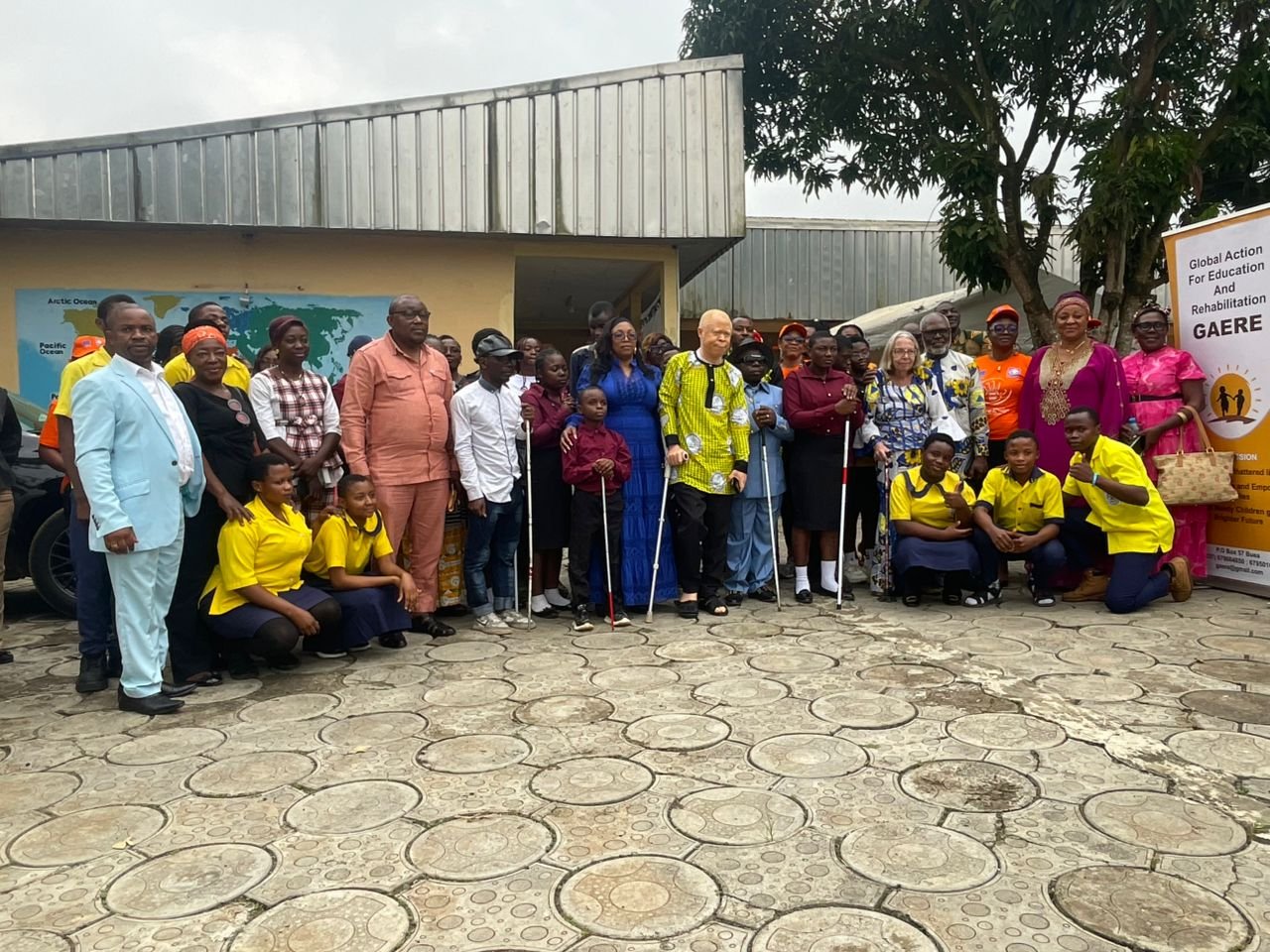
Those were the words of Mrs. Margaret Lloyd Bibum, directress of the Buea School for the Deaf (BSD), during a ceremony to launch activities marking the 2025 International Day for Persons with Disabilities in the South West Region. The ceremony, on November 27th at the BSD Hall, was chaired by the Regional Delegate of Social Affairs, in the presence of other dignitaries.
Mrs. Bibum said running BSD for the last 23 years has exposed her to the way deaf children are discriminated against and undermined, saying it was time parents rethink. “We have a family with five children, and the first child is deaf. When they start looking for fees, they abandon the first child at home, just because she is deaf. We have seen families that have money send their non-deaf children to expensive schools, but they think it is useless to spend on the education of their deaf children.”
The directress said society still runs with multiple stereotypes and misunderstandings about the deaf community, often refusing to associate with them. “Some parents even hide their deaf children because they don’t want to be shamed,” she said.
According to the directress, the BSD and other deaf institutions have proven that there is nothing wrong with deaf people, but much education needs to be done to change the way they are received in society.
She emphasized that governmental actions must be stepped up, particularly in ensuring that Sign Language is given equal weight to English and French, Cameroon’s two official languages.
In countries like South Africa and Uganda, Sign Language has been adopted as an official language, a way to ensure accessible communication for deaf people. But in Cameroon, Sign Language is often the preserve of special institutions like the BSD, and even then, confusion whether to use British or American Sign Language abounds. The Cameroon Association of Schools for the Deaf, made up of twelve schools, says it is actively working to standardize the language but insists that governmental support is needed.
The International Day for Persons with Disabilities, a day set aside by the United Nations to champion the rights of persons with disabilities, is celebrated annually on December 3rd. This year, it is placed under the theme: “Fostering disability-inclusive societies for advancing social progress.” Cameroon’s government says it is looking at how innovation and collaboration can accelerate the inclusion process.
Mrs. Bibum said the theme calls to mind the role of innovative technologies in facilitating the teaching and learning process for deaf children, urging the government to subsidize access to such assistive technologies.
Disability Inclusion expert, Penn Julius, added that the future of disability inclusion would be defined by technology. “It’s going to make life easy for most of them,” he said. He however regretted that because most disabled persons in Cameroon live below the poverty line, affording these technologies would remain nearly impossible.
South West Regional Delegate for Social Affairs, Mr. Fidelis Njie, said the Buea School for the Deaf was chosen to launch the week-long activities as a way to showcase the institution’s work. He praised the founding couple of the institution, who are both deaf, for putting their lives in service of the Cameroonian deaf community.
The BSD was started in 2003 and has since grown to be one of Cameroon’s pioneer deaf educational establishments, boasting a primary, secondary, and vocational section. It currently hosts over 127 children, with the youngest being four years old.
But the school’s administration says they are battling several challenges, including a shortage of teachers, equipment, and parental willingness. “Even when we recruit teachers, we still have to train them in Sign Language,” Mrs. Bibum explains.
A projected video of the institution showed the children engaged in various activities, from football to tailoring.
In 2024, BSD Director, Mr. Bibum Aloysius, told the press that they had been disproportionately affected by the Anglophone Conflict. “Since the start of the conflict, enrolment keeps dropping. Even those who come struggle to pay the full school fees,” he had said.
Closing the ceremony, Regional Delegate emphasized that persons with disabilities must take their destinies into their hands, encouraging them to not just fold their arms and wait for the government to do everything.
 Princely Kesah