

“Many women with disabilities have been brutally raped, with some contracting incurable diseases and others left pregnant…”
By Princely Kesah, Cameroon
Armelle Nogning, a leader of a disabled people organization, has had little reason to be happy for nearly ten years. This is due to a deadly armed conflict in Anglophone Cameroon between government forces and separatists fighting for a breakaway state. Before 2016, women with disabilities suffered sexual harassment, but not as regularly as in recent years of the Anglophone conflict. Rape, domestic violence, and other assaults have become the new normal.
Living with memories of bitter experiences is not something anyone would want. Unfortunately, this has been the situation of Persons with Disabilities (PWDs) in Cameroon’s Northwest and Southwest regions.
“Many women with disabilities have been brutally raped, with some contracting incurable diseases and others left pregnant,” reveals Armelle Nogning, President of the Coordinating Unit of Associations of Persons with Disabilities in Bamenda, the capital of Northwest region.
The disability inclusion crusader, in an exclusive interview with DNA, disclosed that ignorance of reporting mechanisms has left most of her peers with severe mental health complications ranging from isolation, trauma, and depression.
Now, such often-unpunished abuses would soon be laid open. Justice delayed might no longer be justice denied.
For the first time ever since the start of the Anglophone conflict, which has resulted in the deaths of dozens of disabled persons, displacements, breakdown of essential services, and sexual abuses, leaders of organizations of persons with disabilities (OPDs) received training on International Humanitarian Law applicable during armed conflict.
The training, organised by the Christian Blind Mission (CBM), centred on the theme “From Words to Action: Putting the UNSC Resolution 2475 into Practice.” The training, which took place at the Cameroon Baptist Health Service hall in Nkwen, Bamenda, presented a rare but welcomed opportunity for the OPD leaders to augment their knowledge and skills on available steps to accelerate advocacy with state and non-state actors amidst the deadly war.
Participants disclosed that humanitarian schemes had not been inclusive in both conflict-affected Northwest and Southwest regions, highlighting the depth and breadth of harrowing experiences ranging from inaccessible distribution sites, absence of needs assessments, brutality from belligerents, poor reception from host communities, and sexual abuses.
Cases of kidnapping, attacks on disability rehabilitation centres, and killings of persons with disabilities during the conflict have been documented by Disability News Africa, confirming calls from rights groups that urgent, specific humanitarian assistance for persons with disabilities is dire.
The call remains as loud and important as ever, as participants of the Bamenda International Humanitarian Law training shared horrendous experiences regarding the subject.
“GBV against women with disabilities has tripled during the crisis, and especially those compelled to be displaced suffer more, as host community members tend to take advantage of their vulnerability,” reveals Nogning, her eyes filled with tears. She adds that some victims of GBV were left with pregnancies and others with incurable diseases, even as they struggle with access to healthcare facilities.
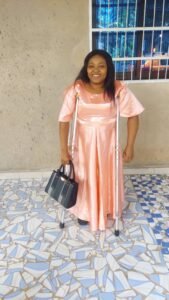
Armelle Nogning presented an account of how she lost a stable source of livelihood due to threats to her life from separatist fighters.
“I had a stable business where I sold food in Bamenda and was obliged to close down due to threats against me on grounds that my business was near a military control post,” she says, highlighting the psychological and physical effects that came with suddenly losing her source of livelihood in the middle of conflict.
This is only a small part of the picture of thousands of disabled persons trapped in a deadly war, which has claimed over six thousand lives, including dozens of persons with disabilities, according to rights groups.
The International Humanitarian Law training might have been long expected, but participants hailed it, describing the skills and knowledge gained as vital in addressing some of the pressing humanitarian challenges plaguing the disability community in Anglophone Cameroon.
“I am taking it as a responsibility to make use of the reporting mechanisms to channel abuses suffered by persons with disabilities and to teach our members who were not able to attend this crucial training,” intimates Nogning, her face beaming with renewed hope.
Participants equally left Bamenda happy that, for once, they had gained knowledge and skills which they would use to lobby local and international humanitarian organizations on how to make outreach schemes more intentionally inclusive.
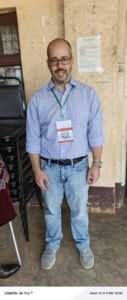
Speaking to DNA at the close of the training, lead trainer William Pons said equipping OPD leaders with the right knowledge to know their rights and how Humanitarian Law protects them is the first step towards improving the conditions of disabled persons amidst armed conflict in Africa, starting with those in Anglophone Cameroon.
“Cameroon has been in a crisis for many years, and it becomes important to be prepared and to know how to communicate with the military, government officials, and non-state actors for the good of persons with disabilities,” the trainer intimates.
William stressed that persons with disabilities are strongly protected under International Humanitarian Law and that all stakeholders in conflict must ensure their wellbeing. Emphasizing that Cameroon is not an exception, the trainer expressly regretted the fact that disabled people in Cameroon are having their rights violated.
There is, however, hope on the horizon. “The participants responded very positively and anxiously to learn, and I look forward to seeing how the training helps them.”
 Njukang Princeley